An AI barn assistant that answers from your own records
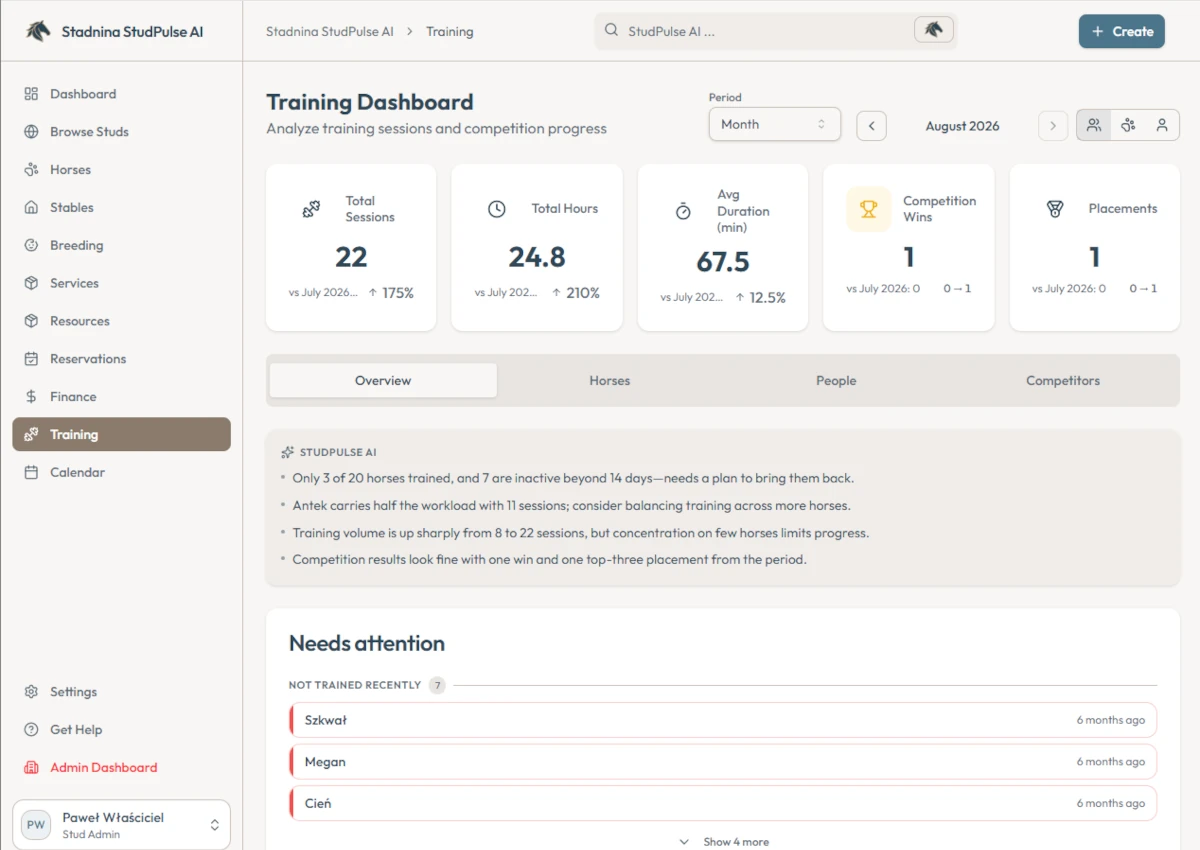
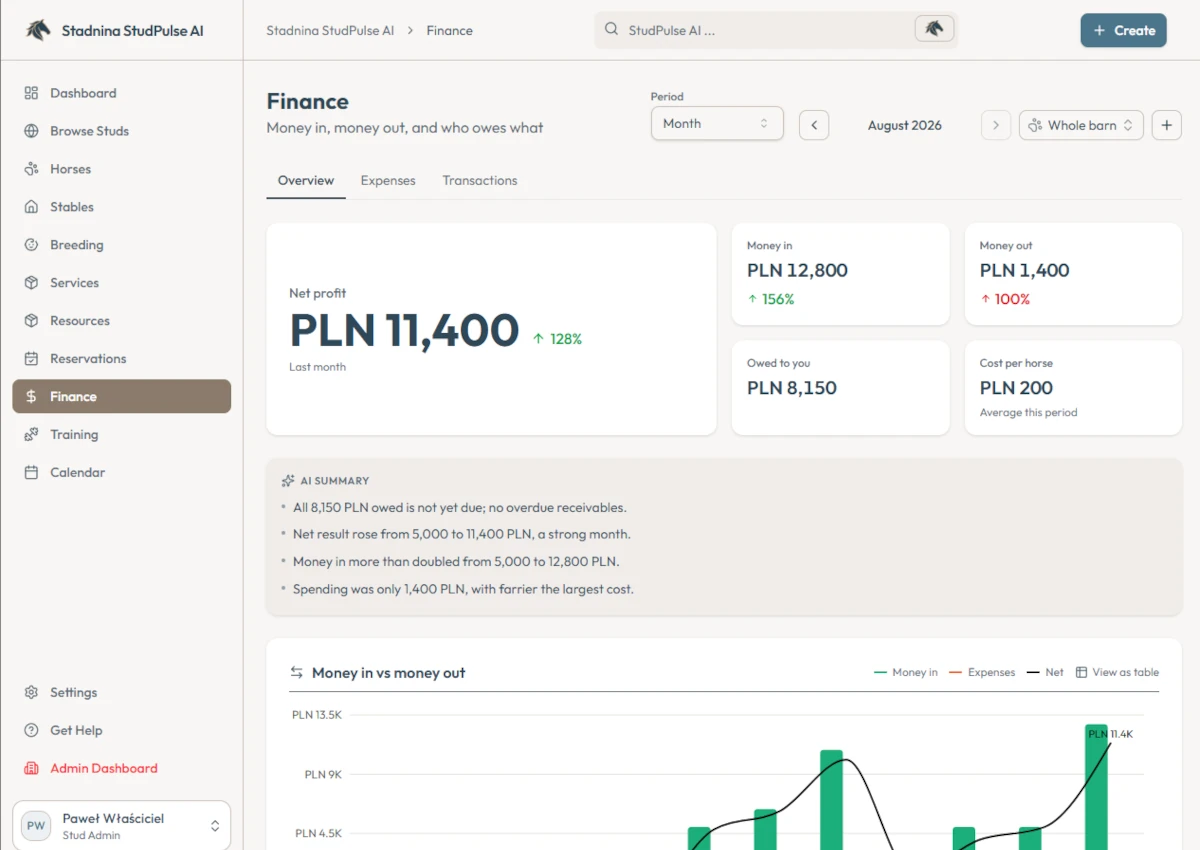
StudPulse has an AI assistant built into the yard rather than bolted on. Ask it about your horses out loud, in your own language, and it answers from your records and a curated equine reference — not from memory, and not from whatever it read on the internet. Free for up to two horses, permanently.
In short
- It reads your records before every answer, and says so when a record has no notes.
- Two sources: your own data, and a curated equine reference searched by meaning rather than keywords.
- It can write as well as read — log a treatment, a feed or a training session by speaking.
- Colic, dystocia, acute lameness and severe bleeding raise an emergency notice before anything else.
- Your records are never used to train AI models.
It is not allowed to answer from memory
Ask most chat boxes about your mare and you get a plausible paragraph. This one is not permitted to do that: before answering anything about your yard it has to read the relevant records, every time. When a record exists but has no notes, it says the record is empty rather than filling the gap with something that sounds right. That constraint is the difference between a tool you can act on and one you have to check.
Two sources, kept apart
Answers draw on your own data and on a curated equine reference covering biology, nutrition, health, breeding, foaling and training. The reference is searched by meaning rather than by keyword, so a question phrased the way a person actually asks it still finds the right passage. What comes from your yard and what comes from the reference are different things, and the assistant does not blur them.
Speaking is the fastest way to log
Hands full, gloves on, a horse on the end of a rope: typing is not happening. Say what occurred and it becomes a record against the right horse — a treatment, a feed, a training session, a weight. The record is marked as having come from speech, so you can always tell how something was entered.
It knows when to stop and say call the vet
Colic, dystocia, acute lameness, severe bleeding and respiratory distress raise an emergency notice ahead of any other answer. Clinical judgement carries the caveat a good vet would give: this needs a physical examination. Software that hedges on that is worse than software that says nothing at all.
Roles apply to the assistant too
A restricted role gets a read-only assistant. An instructor or a client cannot talk it into writing a record they would not be allowed to create in the interface, because the set of tools it is handed depends on who is asking — and that is enforced on the server rather than hidden in the interface.
It remembers across days
Conversations are stored properly rather than living in a browser tab, and the assistant can search what you discussed weeks ago. A question that begins “you said last month…” has somewhere to go.
Who this is for
- Anyone whose records currently live in a notebook because stopping to type was never realistic.
- Yards where several people log things and nobody is sure what has already been entered.
- Owners who want a straight answer about one horse without assembling it from four screens.
Frequently asked questions
Does it make things up about my horses?
It is not permitted to answer about your yard without reading the records first, and when a record has no notes it says so rather than inventing content. That is a constraint on how it works, not a claim about the model being careful.
Will my data be used to train AI models?
No. Vet records, owner names and staff notes go only to providers that do not retain or train on them, and each capability — conversation, speech, search — is routed separately so no single vendor holds your whole yard.
What languages does it work in?
Nine: English, Polish, German, Spanish, French, Dutch, Ukrainian, Arabic and Chinese. You can speak to it and read its answers in any of them, and the rest of the application is translated to match.
Can it give veterinary advice?
It can tell you what your records show and what a curated equine reference says, and it flags emergencies before anything else. Any clinical judgement comes with the caveat that it needs a physical examination. It is not a substitute for your vet and does not pretend to be.
Ask your own records a question
Free for up to two horses, permanently. Thirty days free on any paid plan, and no card to get started.