Stable finance software and cost per horse
StudPulse shows what the yard earns, what it spends and what each horse genuinely costs — including its share of the hay, the wages and the diesel. A shared invoice is split across the horses it covers rather than dropped into one pile, so cost per horse is a figure you can quote to an owner. Free for up to two horses, permanently.
In short
- Income, expenses, what you are owed and what is overdue, month by month.
- One invoice can be split across several horses, and each horse is charged only its own share.
- Cost per horse is calculated from those shares, so it is a real number rather than a total divided by a headcount.
- Whatever cannot honestly be attributed to a horse is shown separately, not quietly spread around.
- A receipt is filed by photographing it, standing in the yard.
What the yard earns and what it spends
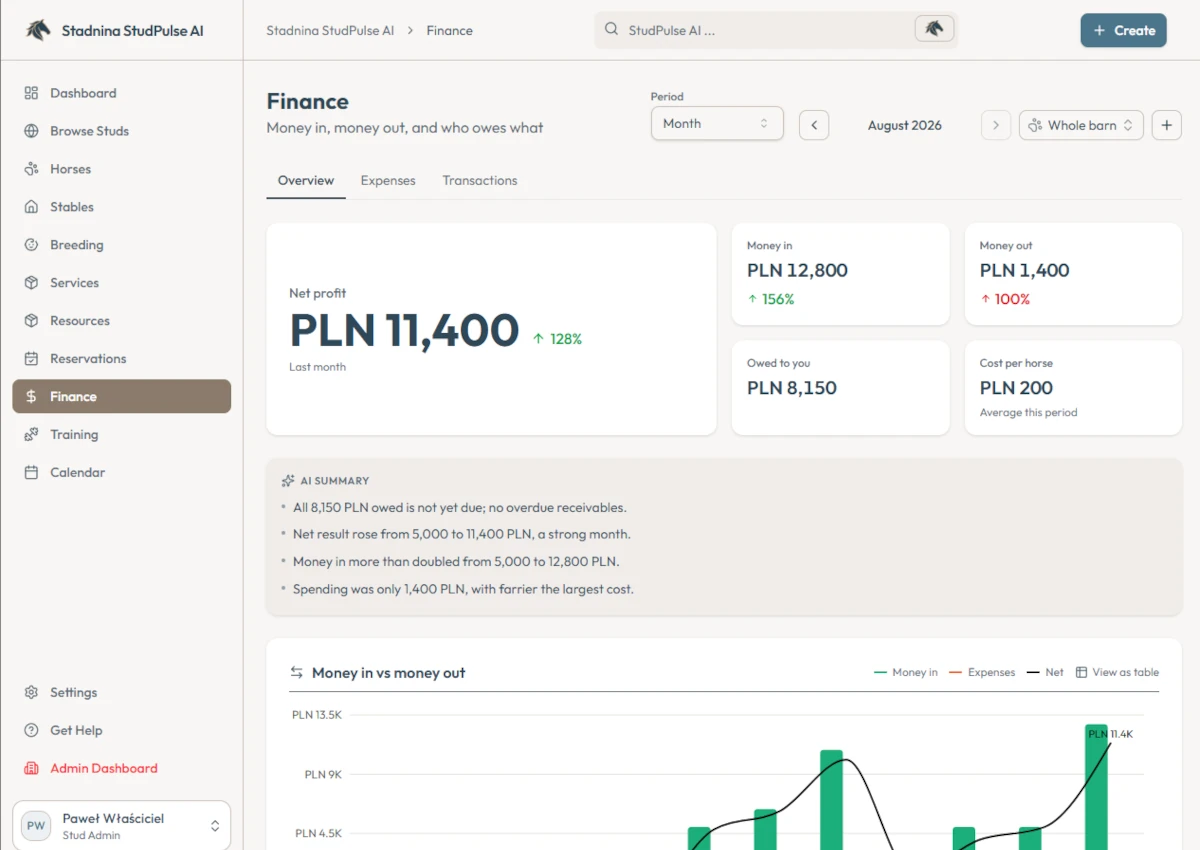
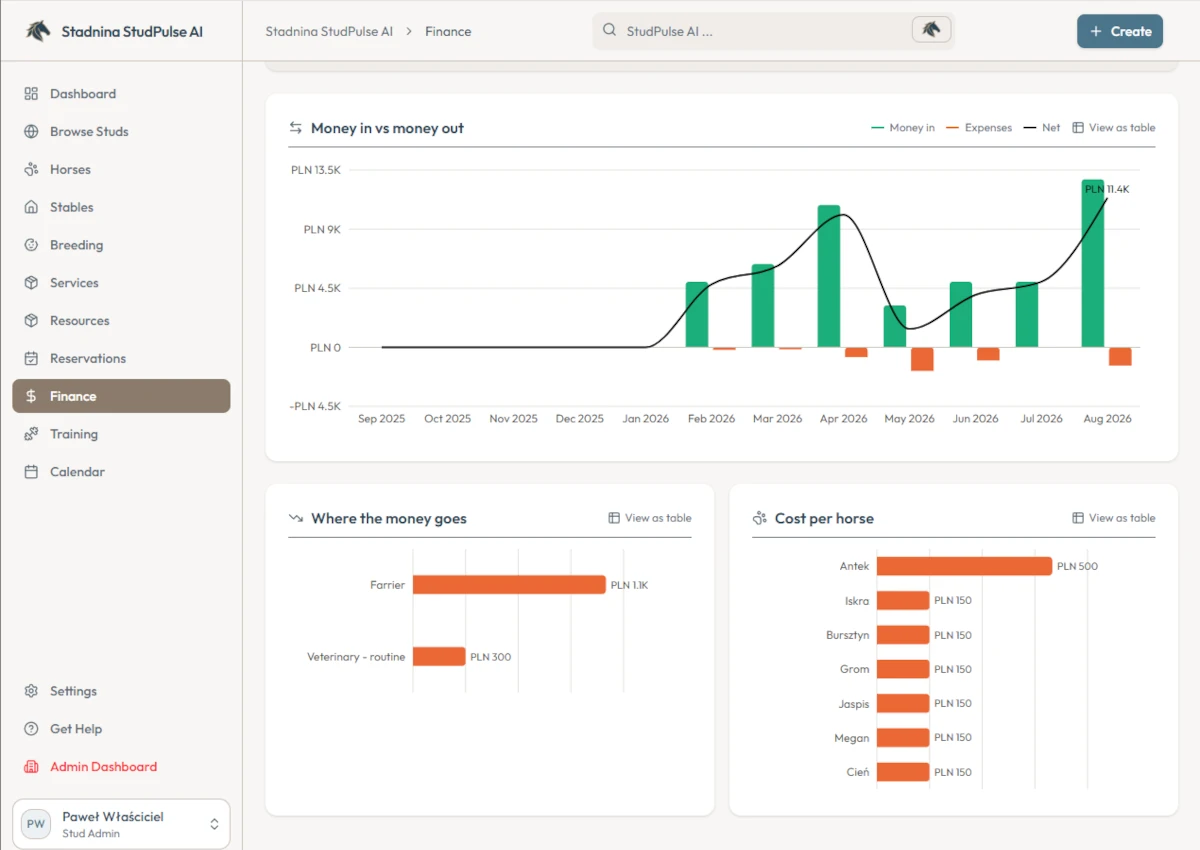
Income and expenses in one ledger, with categories you define rather than ones imposed on you, and vendors you can group spending by. Twelve months of income against costs is a chart, not an afternoon with a spreadsheet. Lessons, livery, coverings and lease fees all arrive here, so there is nothing to reconcile between systems at the end of a month.
Splitting a shared invoice across horses
A load of hay is not one horse's cost, and pretending otherwise is how cost per horse becomes fiction. An invoice can be allocated across the horses it actually covers, in whatever proportions are right, and each horse carries only its own share. That allocation is what everything else on this page is built on — without it, a per-horse figure is just the total divided by however many horses are standing in the yard.
Cost per horse, and what it deliberately does not claim
Each horse's cost is the sum of what was booked directly against it and its share of everything split. Costs that genuinely belong to no particular horse — a repair to the arena, an accountant's fee — are reported separately as unattributed rather than being smeared across the herd to make the numbers look tidy. You get a per-horse figure and an honest note of what sits outside it, which is the version you can defend when an owner asks.
What you are owed, and what is late
Receivables are not a separate exercise: a livery charge, a lesson and a covering fee are all amounts owed, shown beside income actually received. Overdue balances are listed as overdue. Chasing money becomes reading a screen rather than remembering who paid in March.
Receipts, photographed where you are standing
The fuel receipt in your pocket is the one that never reaches the office. Photograph it and attach it to the expense on the spot, and the paperwork lives with the record instead of in a coat until March. Invoices, statements and lab bills attach the same way, to the event they belong to.
A written read of the period
Alongside the charts, the agent writes a short summary of the period in your own language — what moved, what is owed, which horses cost the most, and a warning if some records are in a currency that has been left out of the totals. It is the paragraph you would otherwise have written yourself before a conversation with a partner or an accountant.
Who this is for
- Yards that need to know whether a livery rate still covers what a horse actually costs.
- Mixed operations earning from lessons, livery, breeding and leases who want one set of books.
- Owners and managers tired of reconstructing a year from bank statements every January.
Frequently asked questions
How is cost per horse calculated?
From what was booked directly against the horse plus its share of any split invoice. Shared costs like hay or bedding are allocated across the horses they cover in whatever proportion you set, so the figure reflects real consumption rather than a total divided by the number of horses.
Can one invoice cover several horses?
Yes. An expense can be allocated across several horses at once, and each carries only its own share. This is the mechanism cost per horse depends on, so a shared delivery does not have to be entered several times or assigned arbitrarily to one animal.
What happens to costs that belong to no particular horse?
They are reported separately as unattributed — barn-wide spending shown as its own figure rather than spread across the horses to make the per-horse numbers look complete. You see both, so you know what the per-horse figure does and does not include.
Does it replace my accountant?
No. StudPulse is operational bookkeeping for the yard: what came in, what went out, who owes what and what each horse costs. It does not file tax returns or produce statutory accounts. What it does give your accountant is a year that is already categorised, with the receipts attached.
Start with two horses, free
Income, expenses, receivables and cost per horse, at every size. Thirty days free on any paid plan, and no card to get started.